




ID # 40119656

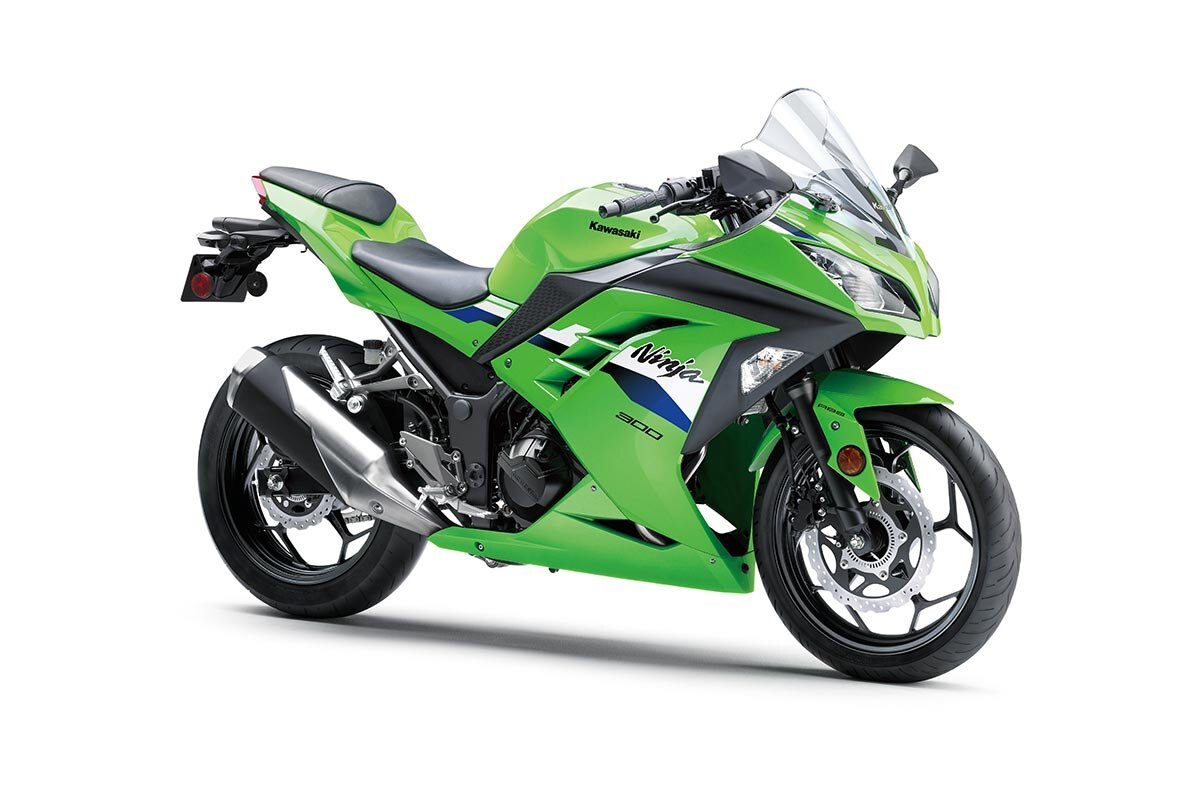
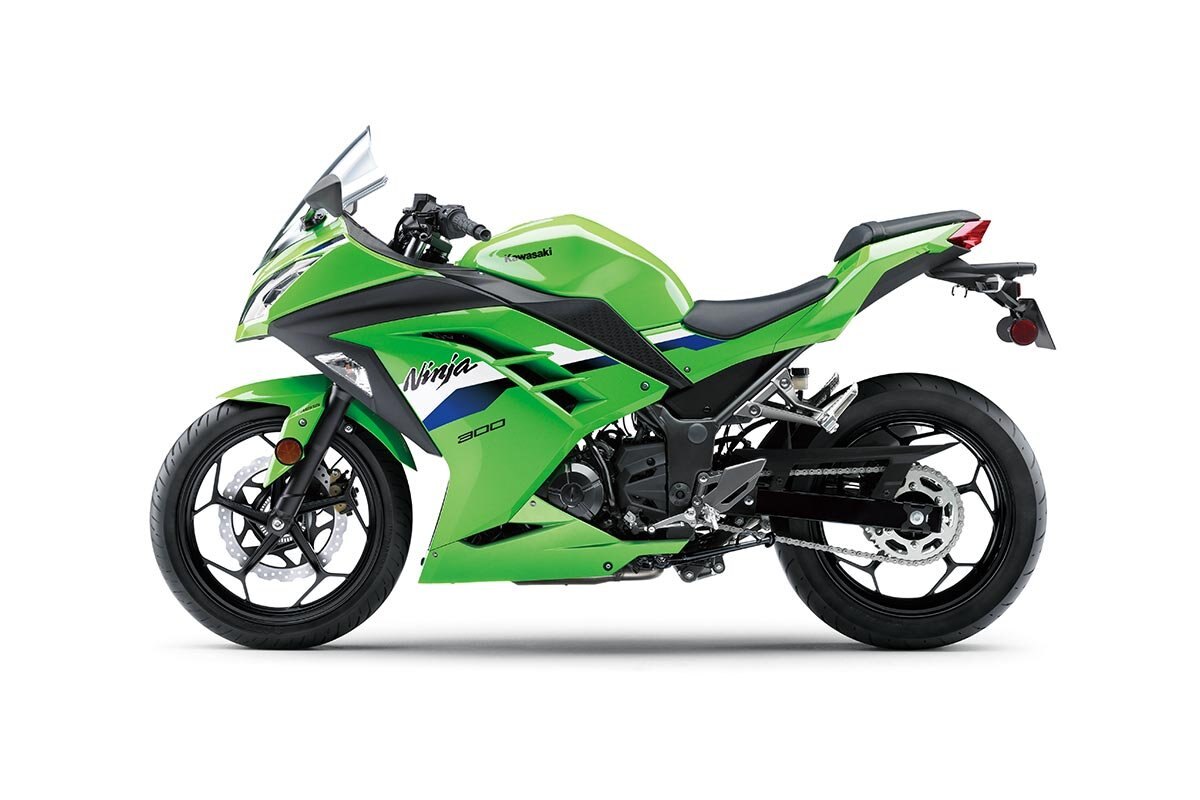
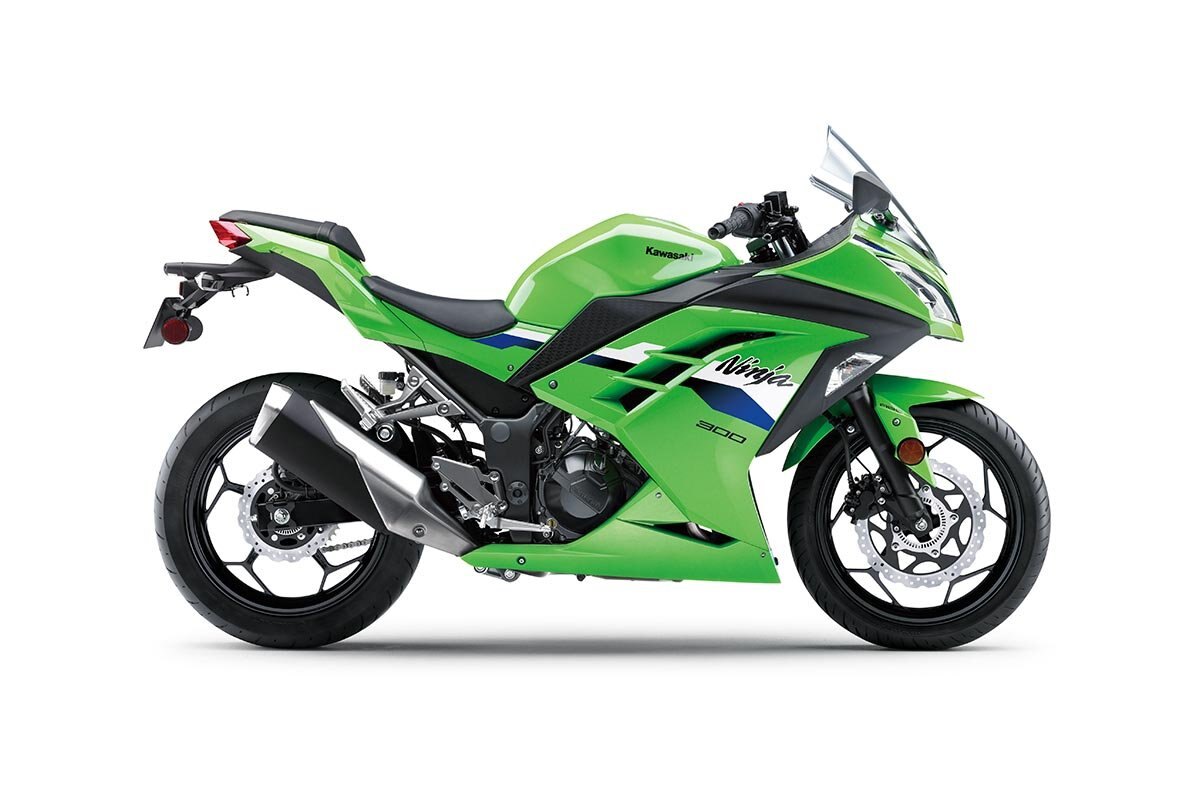
2026 Kawasaki NINJA 300 Lime Green

Call for Price
Overview
From its powerful 296cc parallel twin engine and superb-handling chassis to its impressive large-body Ninja styling, everything about the Ninja 300 was designed to offer riders performance, ride quality and comfort beyond its class.

FEATURING:

  • Powerful 296cc parallel twin engine
  • Circuit-bred chassis with superb handling and excellent ride quality
  • Stunning Ninja styling with high-level fit and finish

ADDITIONAL VEHICLE FEATURES:

  • Assist & Slipper clutch
  • ø37 mm telescopic fork
  • Bottom-Link Uni Trak rear suspension with adjustable preload
  • Wide 140 mm rear tire
  • Double-bubble-type windshield

Specifications
Model
NINJA
Category Name
Motorcycles
Year
2026
Sale Type
New
Manufacturer
Kawasaki
Color
Lime Green
technology

Engine Management Technology

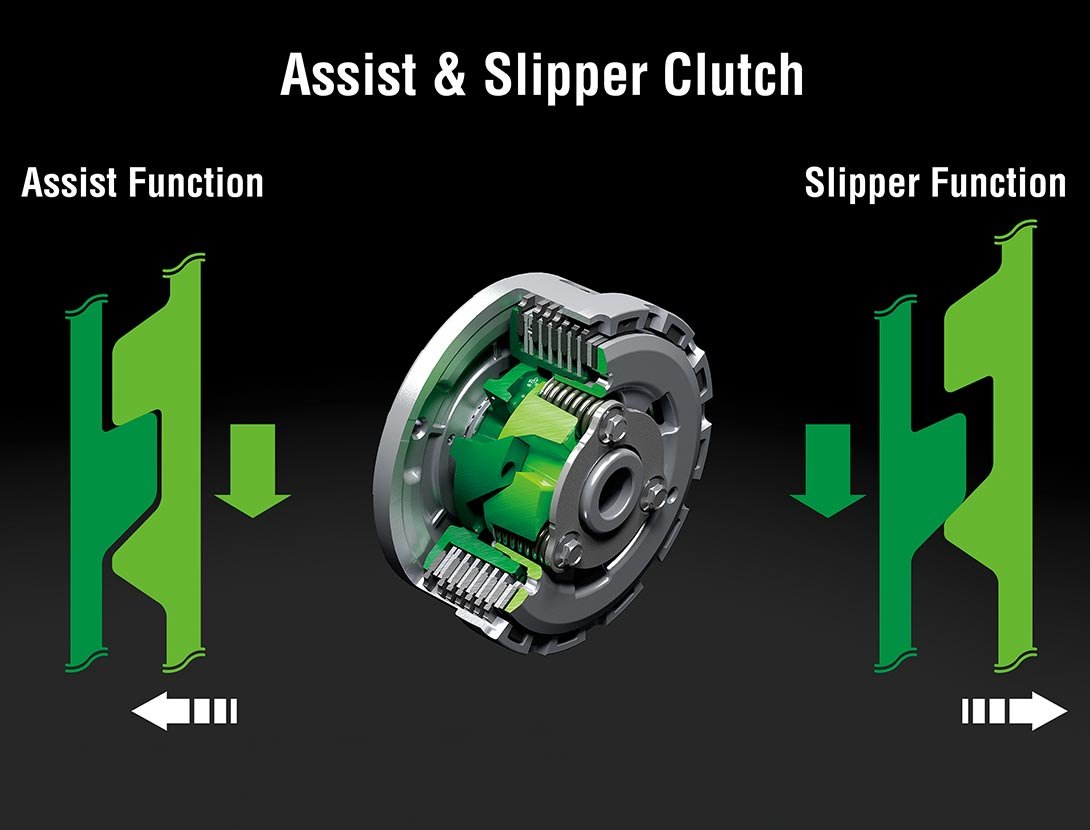
ASSIST & SLIPPER CLUTCH 2026 Kawasaki NINJA 300 Lime Green

Based on feedback from racing activities, the Assist & Slipper Clutch uses two types of cams (an assist cam and a slipper cam) to either drive the clutch hub and operating plate together or apart.

Under normal operation, the assist cam functions as a self-servo mechanism, pulling the clutch hub and operating plate together to compress the clutch plates. This allows the total clutch spring load to be reduced, resulting in a lighter clutch lever feel when operating the clutch.

When excessive engine braking occurs – as a result of quick downshifts (or an accidental downshift) – the slipper cam comes into play, forcing the clutch hub and operating plate apart. This relieves pressure on the clutch plates to reduce back-torque and helps prevent the rear tire from hopping and skidding. This race-style function is particularly useful when sport or track riding.

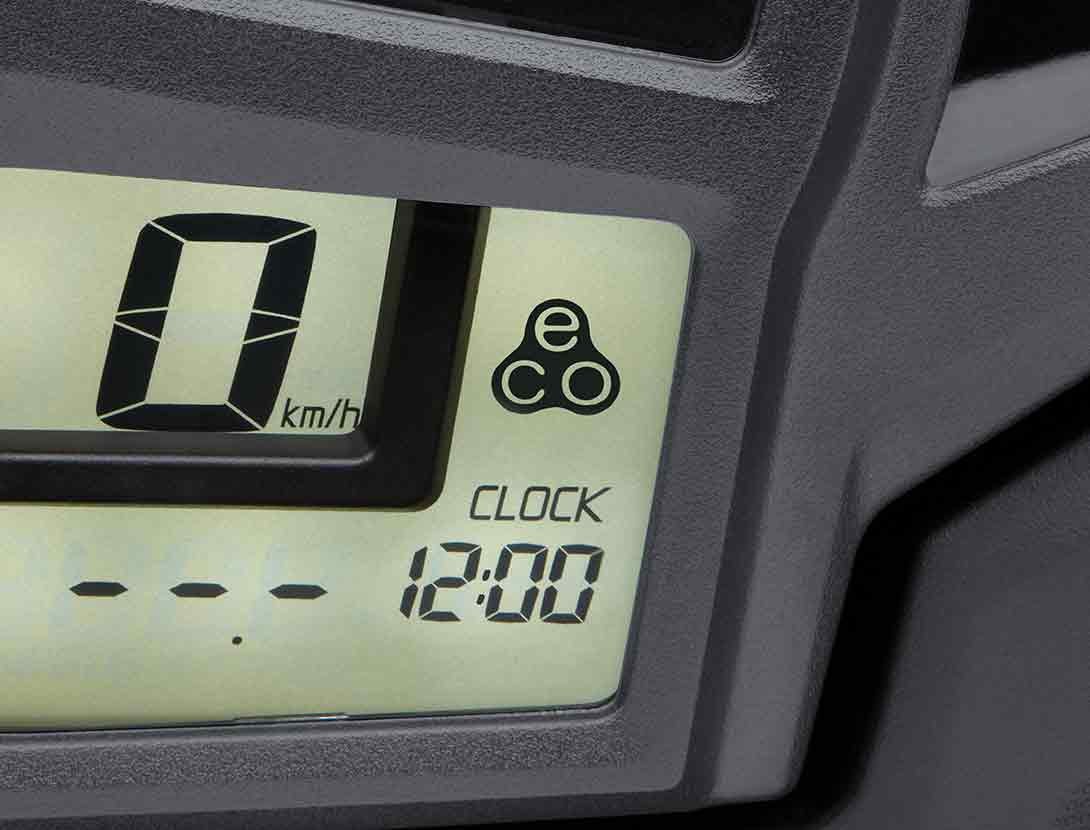
2026 Kawasaki NINJA 300 Lime GreenECONOMICAL RIDING INDICATOR

Using high-precision electronic control for engine management, Kawasaki models can achieve a high level of fuel efficiency. However, fuel consumption is greatly affected by throttle use, gear selection, and other elements under the rider's control. The Economical Riding Indicator is a function that indicates when current riding conditions are consuming a low amount of fuel. The system continuously monitors fuel consumption, regardless of vehicle speed, engine speed, throttle position and other riding conditions. When fuel consumption is low for a given speed (i.e. fuel efficiency is high), an "ECO" mark appears on the instrument panel's LCD screen. By riding so that the "ECO" mark remains on, fuel consumption can be reduced.

While effective vehicle speed and engine speed may vary by model, paying attention to conditions that cause the "ECO" mark to appear can help riders improve their fuel efficiency – a handy way to increase cruising range. Further, keeping fuel consumption low also helps minimize negative impact on the environment.

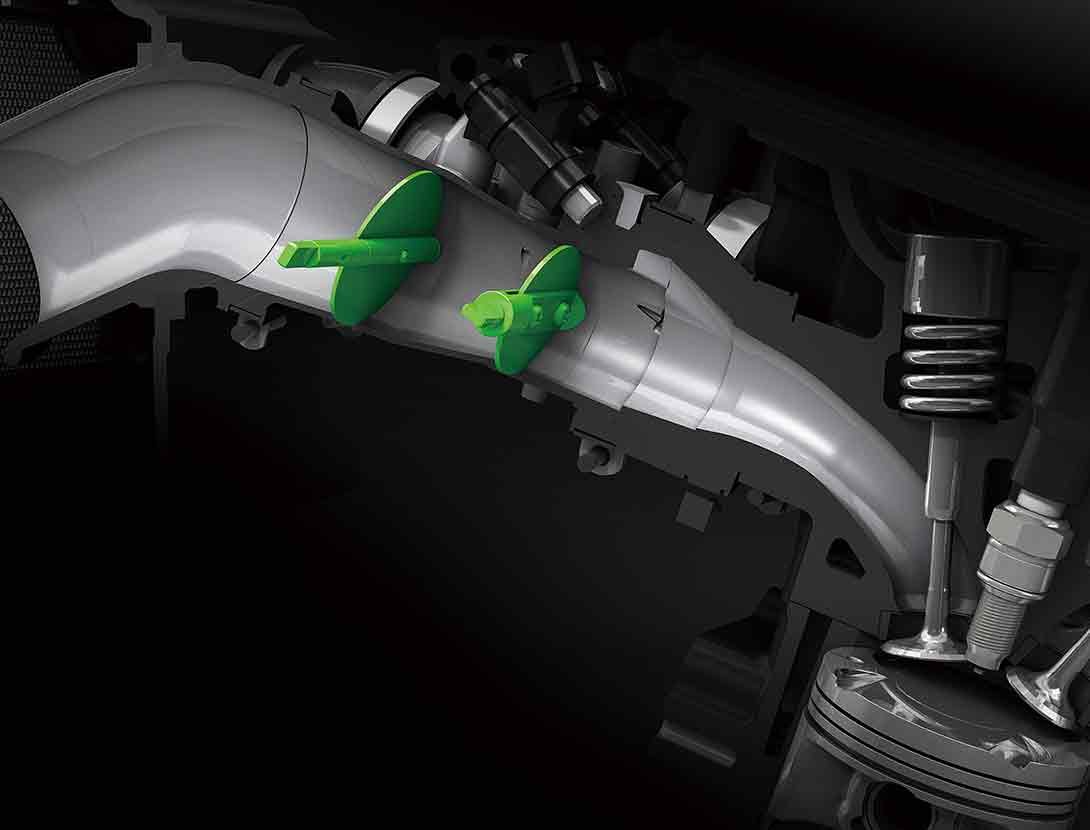
Dual Throttle Valves 2026 Kawasaki NINJA 300 Lime Green

Late-model sport bikes often use large-bore throttle bodies to generate high levels of power. However, with large diameter throttles, when a rider suddenly opens the throttle, the unrestricted torque response can be strong. Dual throttle valve technology was designed to tame engine response while contributing to performance.

On models with dual throttle valves, there are two throttle valves per cylinder: in addition to the main valves, which are physically linked to the throttle grip and controlled by the rider, a second set of valves, opened and closed by the ECU, precisely regulates intake airflow to ensure a natural, linear response. With the air passing through the throttle bodies becoming smoother, combustion efficiency is improved and power is increased.

Chassis Management Technology

ABS (ANTI-LOCK BRAKE SYSTEM)

Kawasaki ABS systems use front and rear wheel sensors to constantly monitor wheel speed. Should information from either of the sensors indicate that wheel lock has occurred, the ABS ECU directs the pump in the ABS unit to modulate brake fluid pressure (releasing and reapplying pressure so that traction can be regained) until normal operation resumes. ABS offers rider reassurance that contributes to greater riding enjoyment.

power
Power
29.0 kW {39 PS} / 11,000 rpm
Clutch
Wet multi-disc, manual
Engine
296cc, liquid-cooled, 4-stroke, DOHC 8-valve parallel twin
Torque
26.0 Nm {2.7 kgfm} / 10,000 rpm
Ignition
Digital
Starting
Electric
Final Drive
Chain
Fuel System
Fuel injection: ø32 mm x 2
Lubrication
Forced lubrication, wet sump
Transmission
6-speed, return
Bore X Stroke
62.0 x 49.0 mm
Compression Ratio
10.6:1
performance
Frame
Twin-tube, aluminum
Rear Tire
140/70-17M/C 66H
Front Tire
110/70-17M/C 54H
Rear Brake
ø220 mm petal disc with dual-piston caliper
Front Brakes
ø290 mm petal disc with balanced actuation dual-piston caliper
Rake / Trail
27.0° / 93 mm
Steering Angle (L/R)
35° / 35°
Rear Suspension / Wheel Travel
Bottom-link Uni Trak, gas-charged shock with adjustable spring preload / 132 mm (5.2 in)
Front Suspension / Wheel Travel
ø37 mm telescopic fork / 120 mm (4.7 in)
details
Warranty
12 months
Wheelbase
1,405 mm (55.3 in)
Seat Height
785 mm (30.9 in)
Curb Weight*
176 kg (388 Ib)
Fuel Capacity
17 litres
Road Clearance
140 mm (5.5 in)
Instrumentation
Analogue-style tachometer + warning lights and LCD screen with digital speedometer, odometer, dual trip meters, fuel gauge, clock and Economical Riding Indicator
Estimated Dry Weight
213 kg (470 lb)
Dimensions (L X W X H)
2,015 x 715 x 1,160 mm (79.3 x 28.1 x 45.7 in)
Kawasaki Protection Plus
12 / 24 / 36 / 48 months